How every number is worked out — and how to check it
Before you sign something, you should be able to say where the figure came from and prove it in two minutes. For each number: where it lives, the arithmetic behind it, the check that proves it, and what a difference usually means.
Nothing matches that. Try a shorter word.
Who has seen a record #
Where Correspondence » Reports » Access
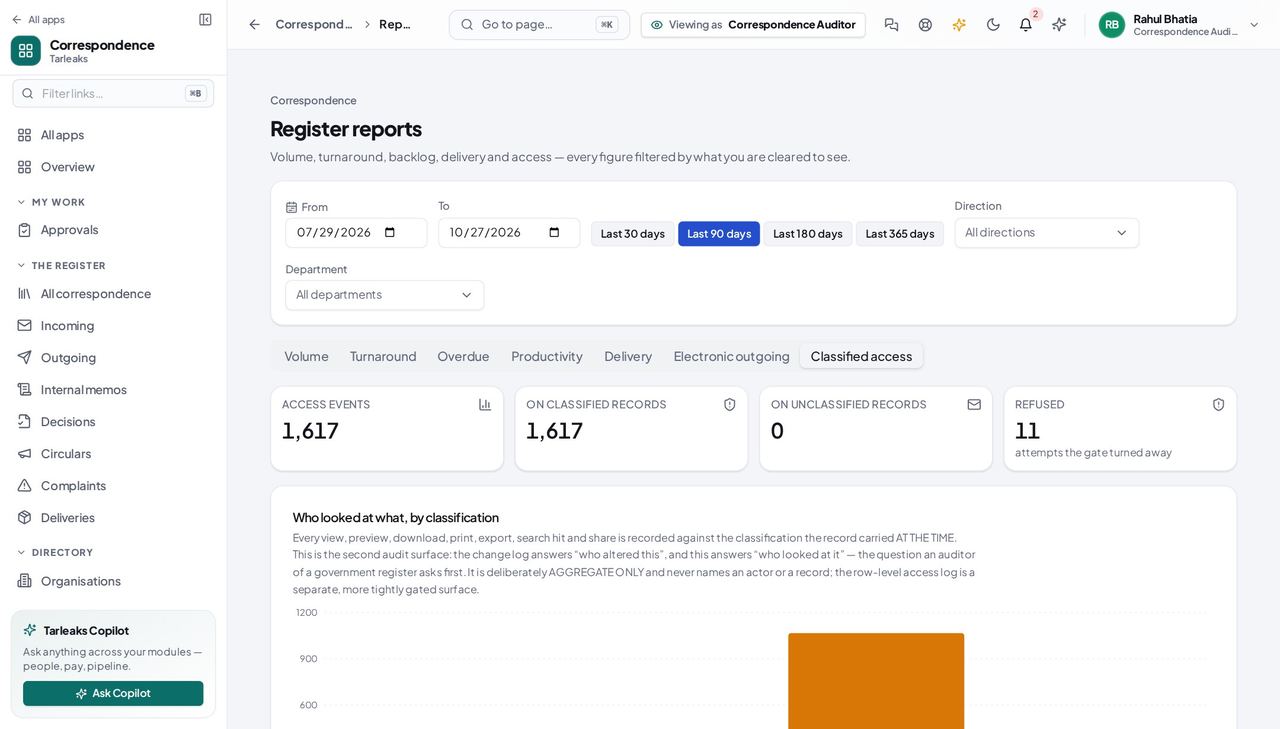
How it is worked out Every view, download, print and refused attempt, stamped with the classification at the time and gated at the record's level today.
Check it like this Filter the access trail to the record's id and read it.
If it disagrees A refused count of zero covering a period before 12 September 2026 means 'not recorded' — refusals were not written before that date.
When a record will be destroyed #
Where Correspondence » Archive » Due for disposal
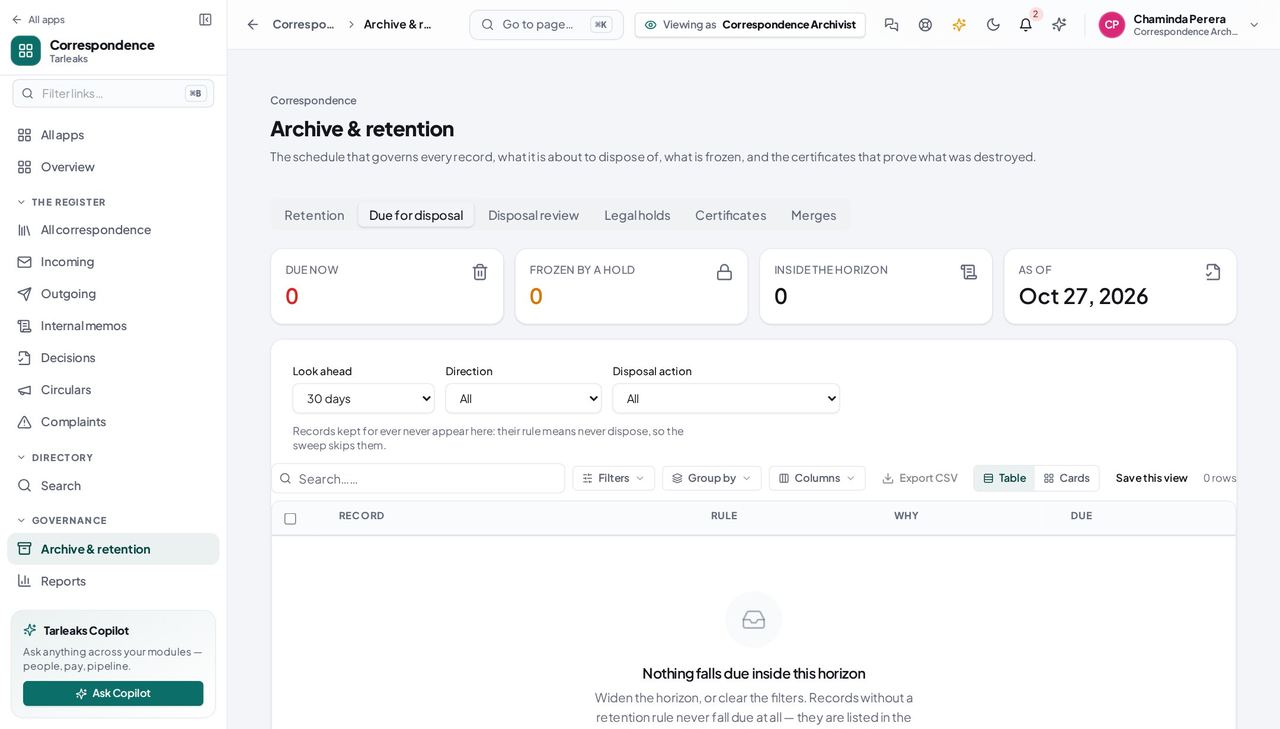
How it is worked out Its retention rule, counted from the trigger the rule names — closure, dispatch or the date it was received.
Check it like this Find the record in the disposal preview and read which rule brought it there.
If it disagrees A record under a legal hold shows a date and will not be destroyed. The hold outranks the schedule.
What was destroyed, and by whom #
Where Correspondence » Archive » Certificates
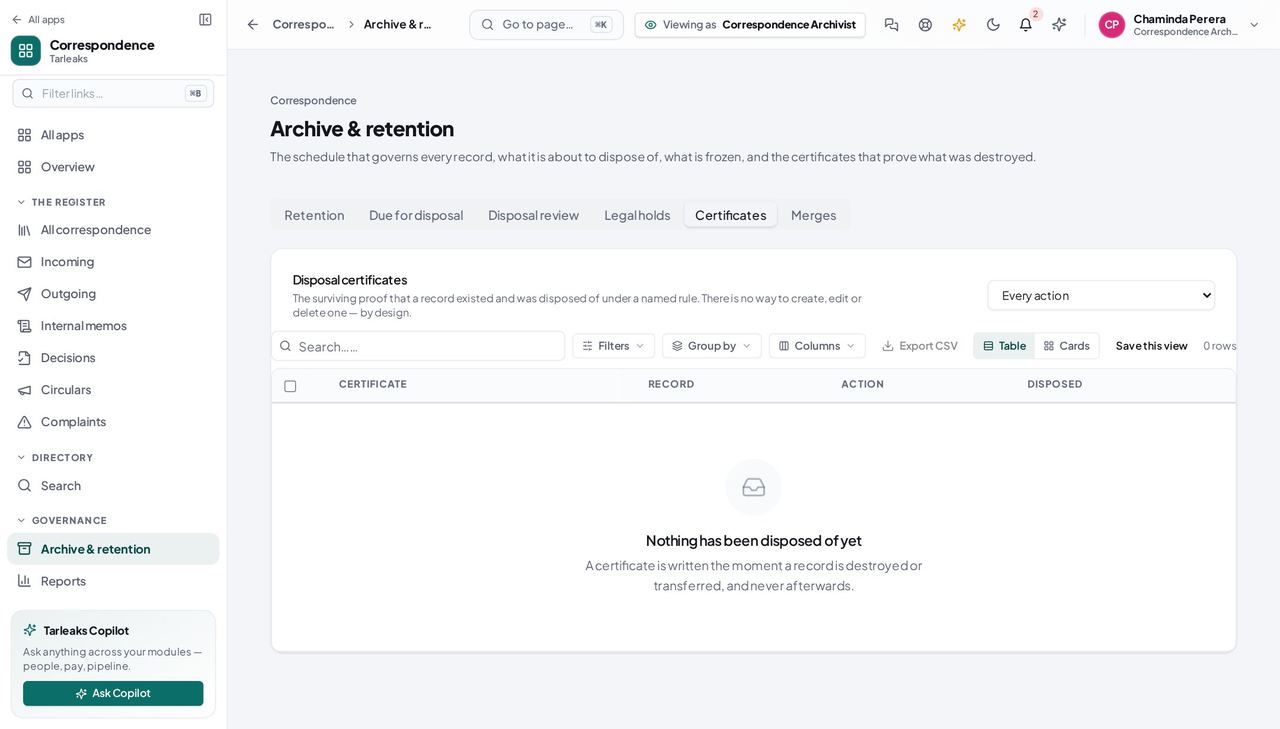
How it is worked out One certificate per disposal, naming the rule, the action, the actor and a checksum of the content at the moment of destruction.
Check it like this Find the certificate by the record's reference number.
If it disagrees Certificates issued before 12 September 2026 carry no actor and no checksum, and their journal entry names the record's AUTHOR. That is history, not evidence.
How long the registry is taking #
Where Correspondence » Reports » Turnaround
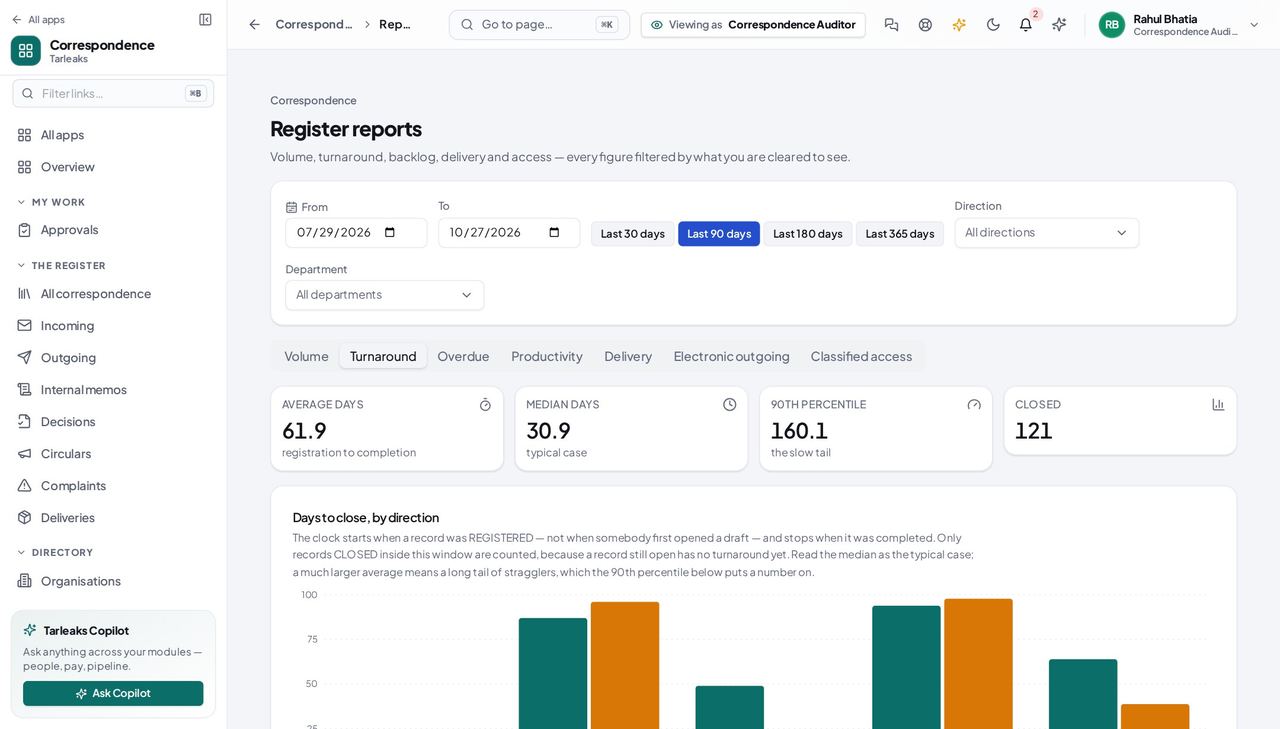
How it is worked out Registered to closed, averaged by type and by department.
Check it like this Read the turnaround report for the period.
If it disagrees A record that was never closed is not in the average. Check the overdue list beside it.
Faster ways to do the same work
| What you want | How |
|---|---|
| Find a letter without remembering who had it | Search across subject, body and reference number — the register searches the contents, not only the title. |
| Send a letter to a job rather than a person | Route to the POST. Everybody holding that role sees it, which is what you want when you do not know who is in. |
| See only what is waiting on you | My queue. The tiles above it filter the list below, so clicking 'overdue' shows exactly what it counted. |
| Keep a view you built | The filters live in the address bar, so you can bookmark it or send it to somebody — they see the same view, narrowed to what THEY are cleared for. |
| Stop a record being destroyed | Place a legal hold and name the matter. It outranks the retention schedule and the nightly sweep. |
| Find out why a list looks empty | Three different reasons, and the page says which: a filter is narrowing it, your clearance hides classified records entirely, or there genuinely is nothing. |