HR Specialist — HR guide
Keep the records straight so everyone else's month works.
Runs HR's day: new joiners, documents, requests and the records everyone else relies on being right.
What you will be able to do
- Add a new joiner and start their onboarding
- File documents where retention is applied automatically
- Work the request queue without guessing who approves what
- Keep the directory clean enough to trust
What this role can and cannot do
| Can | Cannot |
|---|---|
|
|
6 steps, each one carried out in the product on .
Check what your sign-in can do #
Where Your name, top right » Profile
- Open your company's address in the browser — it looks like yourcompany.tarleaks.com.
- Type the e-mail address your administrator set up for you, then your password.
- You land on the app launcher: a grid of the apps your company uses.
- Click your name, top right.
- Choose Profile.
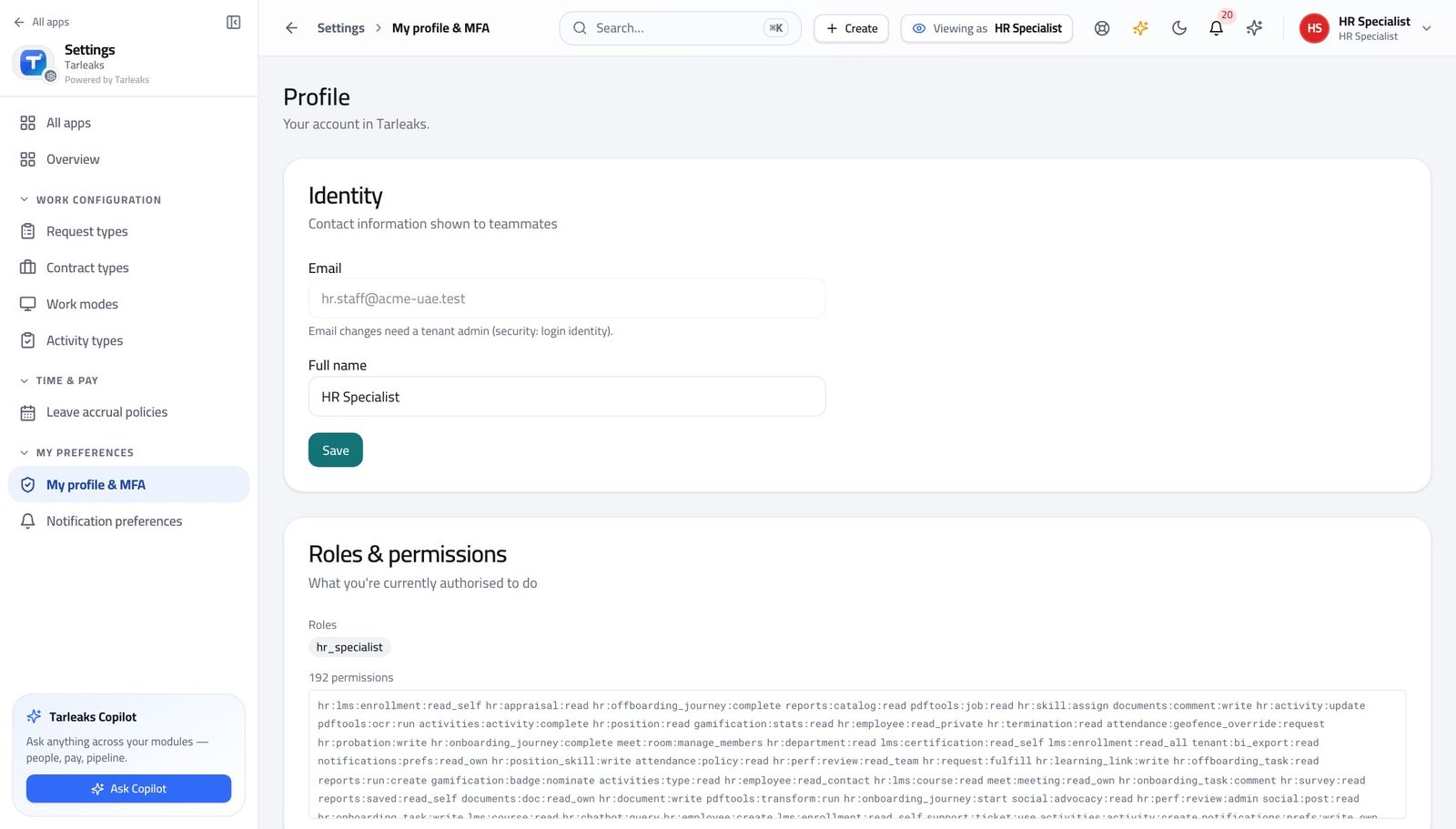
You should see It says HR Specialist. You create and maintain records; terminations and legal holds belong to the HR manager.
Find anybody in seconds #
Where HR » People
- Open People.
- Search by name, number or position.
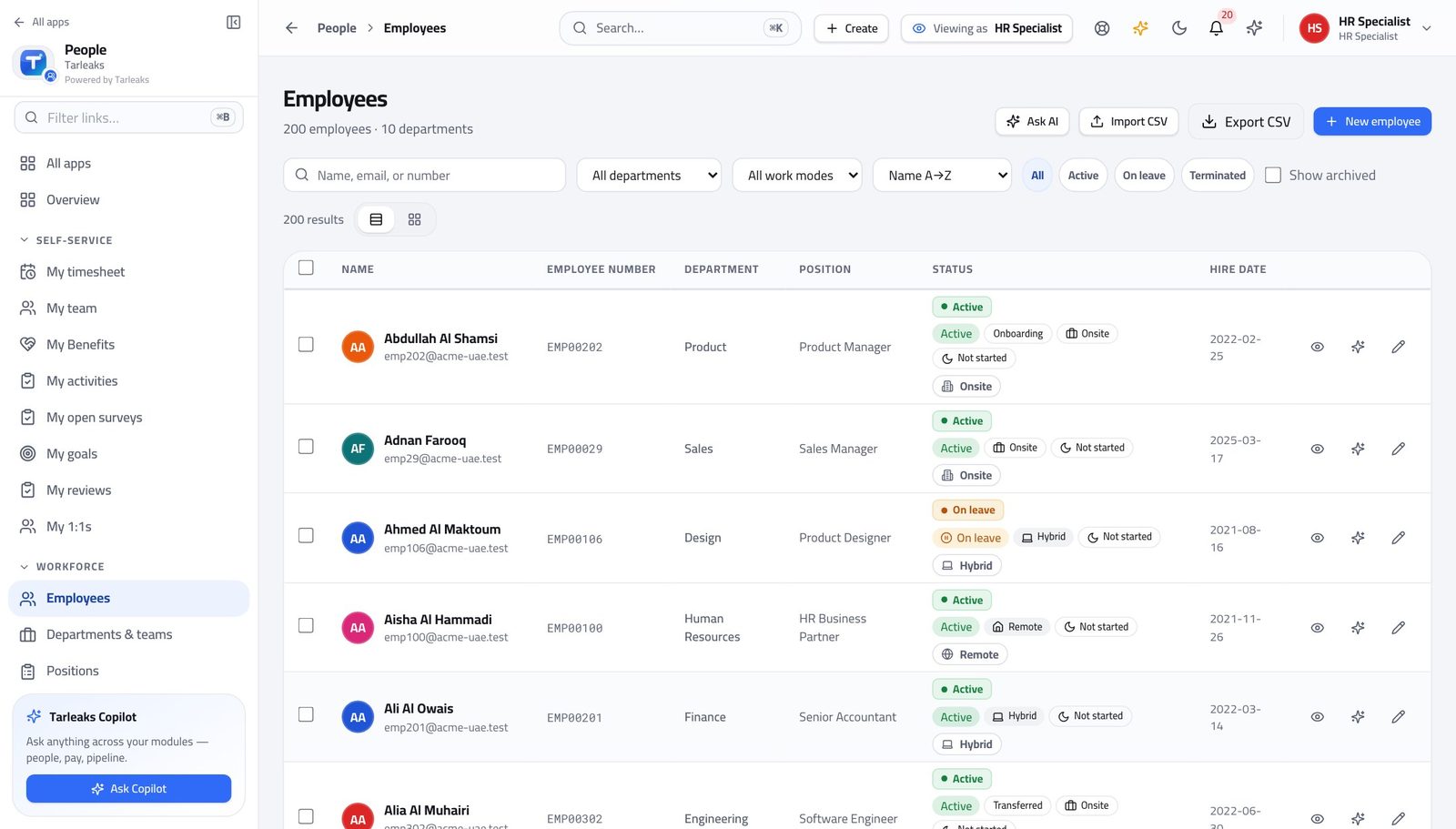
You should see The directory is the spine of everything else — payroll, attendance and access all read from it.
Add a new joiner #
Where HR » People » New employee
- On People, click New employee.
- Fill the identity and the job.
- Set the reporting line and the department.
- Save.
| Field | What to put in it |
|---|---|
| Full name | As it appears on their passport or ID — this is what prints on letters and contracts. |
| Employee number | Your own reference. Leave it blank and one is generated. |
| Department | Drives who can see this person: a line manager sees the departments they manage. |
| Position | The job title, from the position list rather than free text, so reporting stays comparable. |
| Manager | Who they report to. This is what builds My team and the org chart. |
| Start date | The first working day. Onboarding tasks are scheduled from it. |
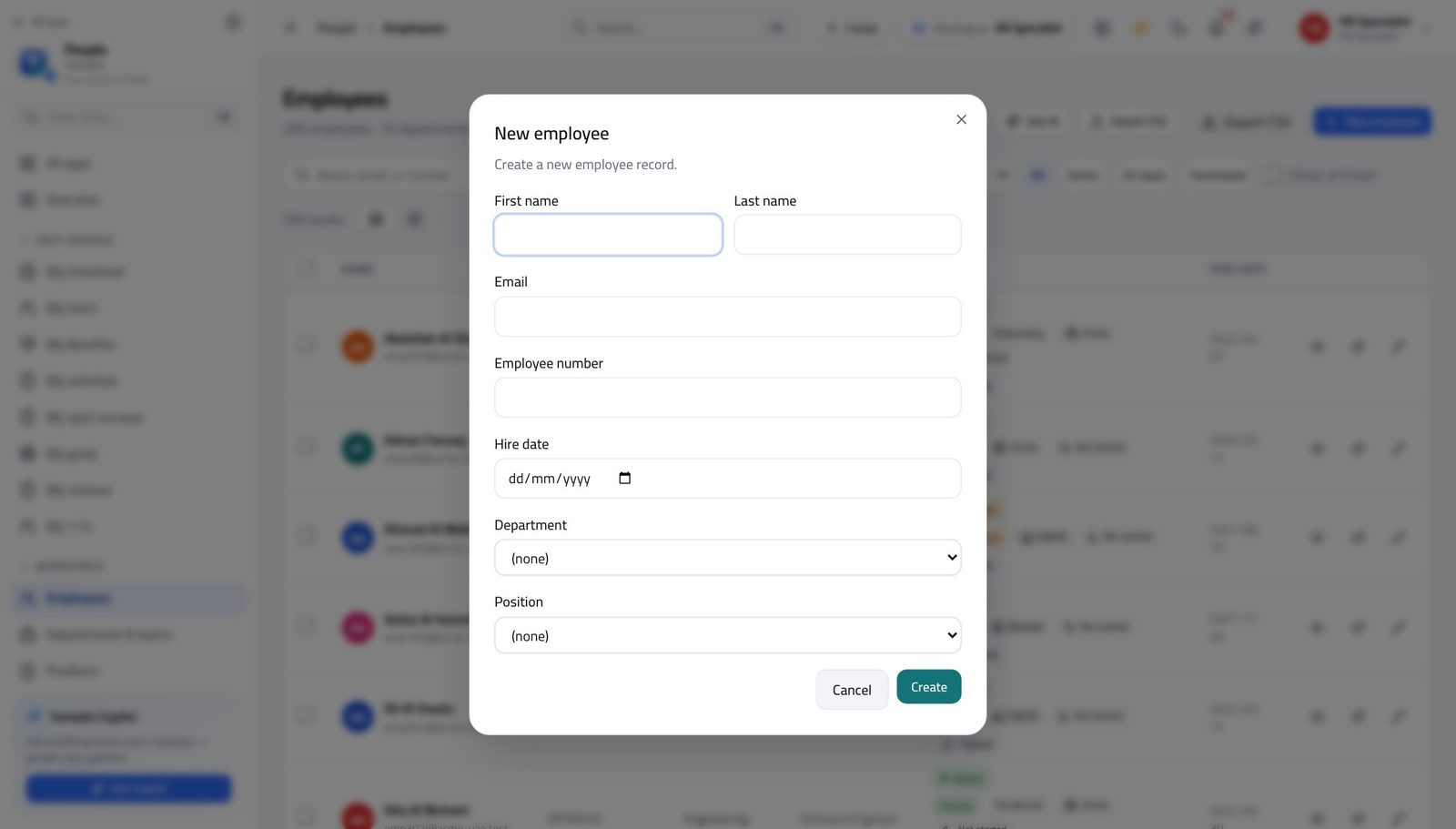
You should see The person exists once, and every other module reads that one record.
Watch out Link the person to their login as soon as they have one, or self-service and My team will not recognise them.
Worth knowing Link them to a login as soon as they have one. Without it, self-service and My team cannot recognise them.
File a document where retention applies itself #
Where HR » Documents
- Open Documents.
- Choose the document type BEFORE uploading.
- Upload the file against the person.
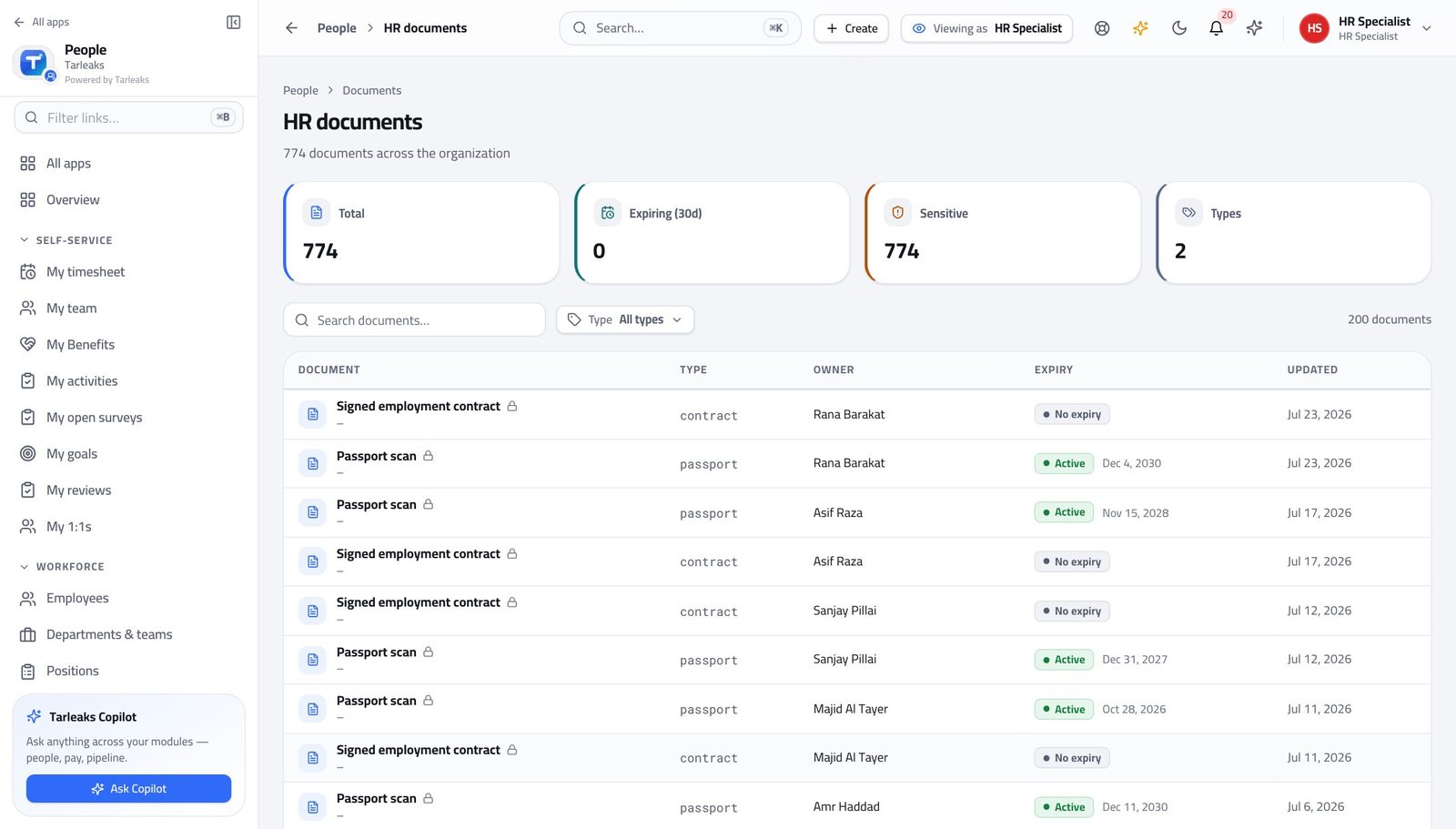
You should see The type is not a label: it drives how long the file is kept and what happens at the end of that period.
Watch out Uploading under the wrong type sets the wrong retention clock, and the clock is what an auditor asks about.
Work the request queue #
Where HR » Requests
- Open Requests.
- Filter to waiting.
- Open the oldest.
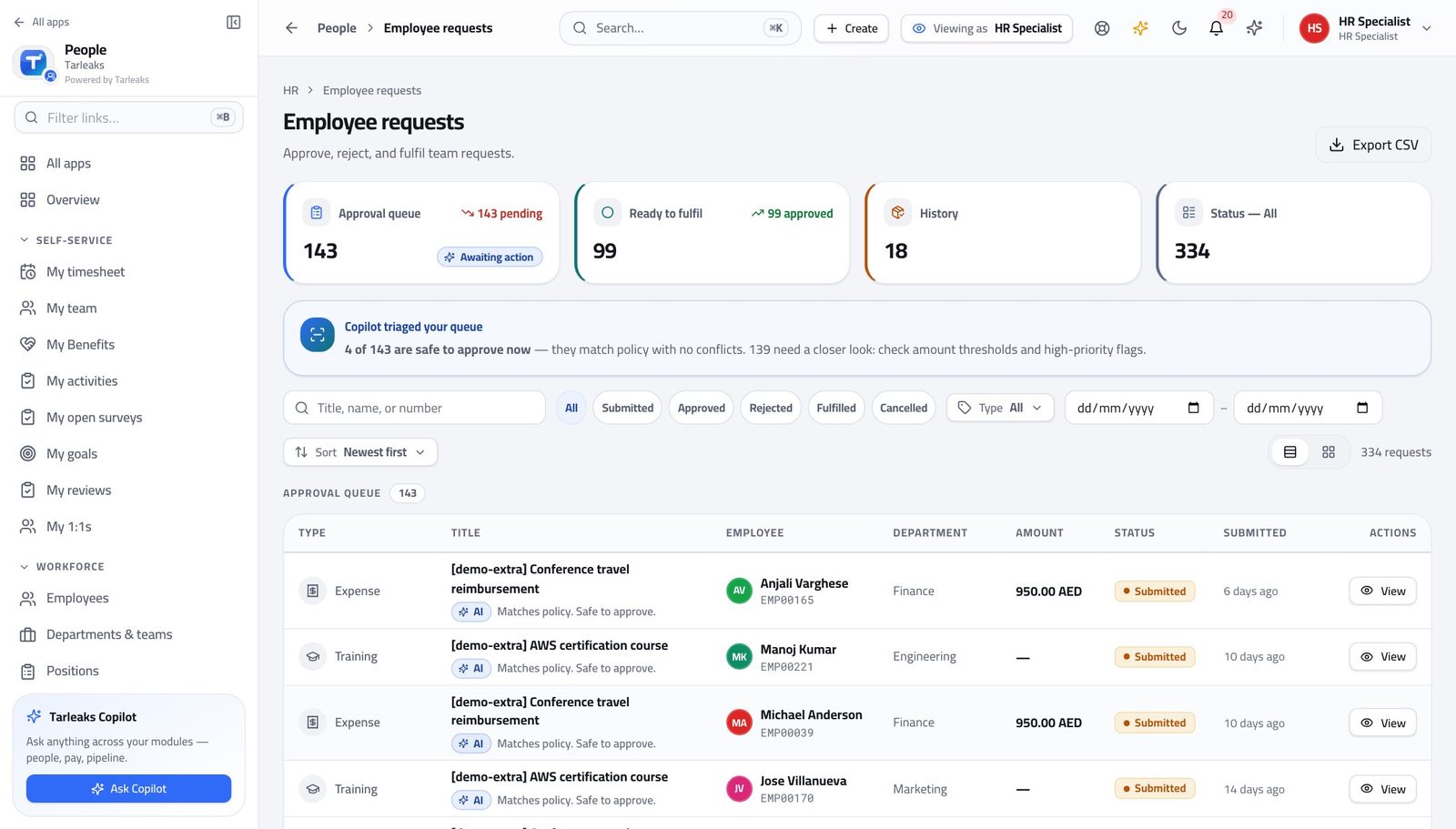
You should see Every request carries its own approval chain, so you never have to ask who signs this one.
Start somebody's onboarding #
Where HR » Onboarding
- Open Onboarding.
- Start a journey for the joiner.
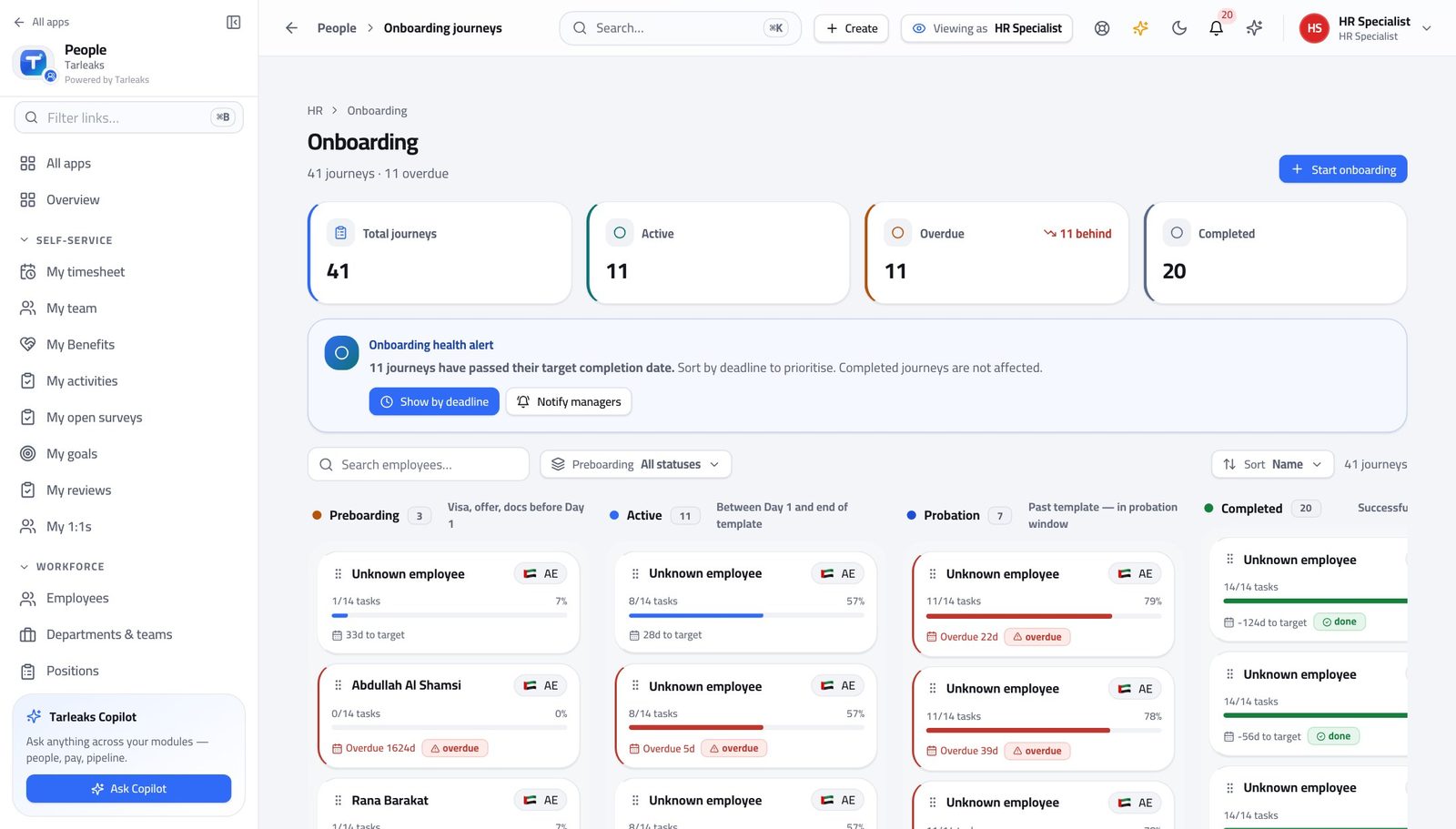
You should see Tasks are copied from the template at the moment you start, so later template edits cannot rewrite somebody's first week.
Use cases — the work, step by step
Each one is a sequence somebody actually performs, with the screen behind every step. Every screen here was opened in the product as this role before it was published.
weeklyA new joiner, from record to first week #
Everything downstream — payroll, access, attendance, their manager's team list — reads the one record you create here.
Open People and check they are not already there: rehires and transfers are the usual cause of a duplicate person.
HR » People — verified: 25 row(s) listed Create the record: identity, job, department, manager and start date. Department and manager are what give their line manager sight of them.
HR » People » New employee — verified: the control is offered Start their onboarding from the template that matches their country and role — the tasks are copied at that moment, so a later template edit cannot rewrite their first week.
HR » Onboarding — verified: the page says “Onboarding” File the documents you already have against the right document type, so retention starts on the correct clock.
HR » Documents — verified: the page says “Document”
dailyWork the request queue without guessing #
Every request carries its own approval chain, so the question is never who signs this one — only whether it is complete.
Open Requests and filter to what is waiting.
HR » Requests — verified: the page says “Request” Open the oldest, read what was asked for, and check the chain shows who has already signed.
HR » Requests — verified: the page says “Request” If it needs a document, file it against the person first — then the approver has everything in one place.
HR » Documents — verified: the page says “Document”
Termination, legal holds and data-subject requests belong to the HR manager. You prepare everything up to that line.